
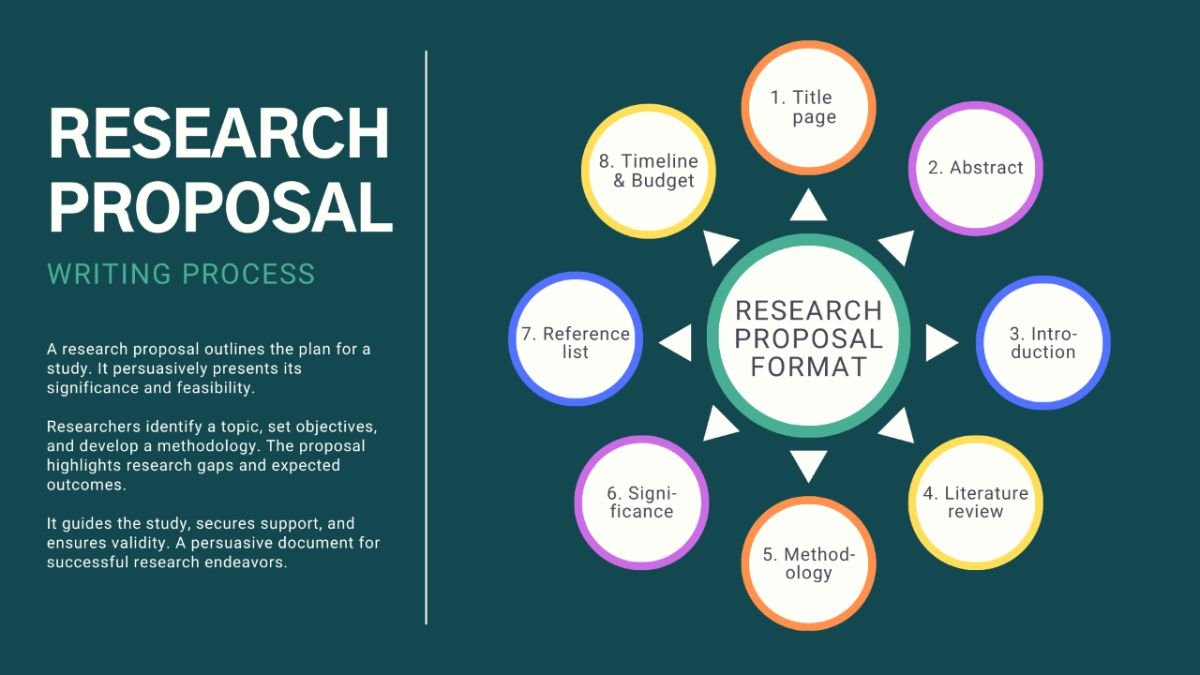
A research proposal is the most important part of any research. It not only clarifies your ideas and objectives, but also reflects the direction and significance of your research. If you want to prepare your research proposal in an easy, effective, and organized manner, this guide is perfect for you. We’ll explain it in 10 key points to simplify the entire process.
What is a Research Proposal and Why Is It Needed?
First, it’s important to understand what a research proposal is. It’s a document in which you clearly state the purpose, significance, research methods, and expected results of your research. The main purpose of a proposal is to prove that your research is realistic, important, and worthwhile.
A proposal serves as a guide for researchers, universities, and funding agencies. If your proposal is clear and precise, it helps get your research approved.
Selecting the Topic and Identifying the Problem
The first step in writing a research proposal is selecting the topic. This topic should be relevant to your field of study, and it’s important to evaluate the existing literature on it.
Next, it’s important to clarify the problem or research question. Identifying the problem determines the direction your research will take and the problem it will address. For example, if you’re researching “water crisis in urban areas,” your question might be, “What factors influence urban water management?”
Clearly State the Objectives and Objectives
It’s crucial to state your research and its main objectives in a research proposal. Write the objective clearly and concisely.
For example, your objectives might be:
Identify the main causes of the urban water crisis
Provide suggestions for improving water management
Clarifying the objectives will help the reader understand that your research is not only thoughtful but also practical.
Preparing a Literature Review
A literature review demonstrates the strength of your research. In it, you cite previous research, articles, and other sources and explain how your study is different or new from them.
A literature review also demonstrates that you have thoroughly studied your topic and have a solid foundation. When writing it, it is essential to reference key research papers, books, and reliable online sources.
Research Methodology and Design
It is crucial to explain how you will conduct your research in a research proposal. This is called methodology. It describes whether you will use qualitative, quantitative, or mixed methods.
For example:
- Collecting data through surveys and interviews
- Conducting laboratory experiments or case studies
- Using statistical techniques to analyze data
In this step, it is also important to explain where the data will come from and how it will be collected.
Resources Required for Research
A research proposal must outline the resources your research requires. This may include funding, time, equipment, and other resources.
For example, if your research is on water management, you may need survey equipment, water testing kits, computer software, etc. Clarifying resources in advance provides credibility to funding agencies and universities.
Research Timeline
A good proposal should clearly outline the timeline. It outlines the timeframe you will complete your research and the steps involved.
For example:
- Month 1: Planning the literature review and data collection
- Month 2: Collecting data
- Month 3: Analyzing the data
- Month 4: Preparing the report and drawing conclusions
Clearly outlining the timeline makes the proposal appear more organized and practical.
Potential Outcomes and Contributions
The proposal must state what results your research will produce and what contributions it will make to society or science.
For example, research on the water crisis could lead to the following outcomes:
Identification of new strategies for urban water management
Suggestions for policymakers and the community
Foundation for further research
This section demonstrates that your research is not limited to gathering information, but rather has practical utility and significance.
References & Citations
The credibility of a research proposal depends on your sources and citations. It is important to cite all studies and articles correctly.
Sources are typically written in APA, MLA, or Chicago Style. Proper citation not only makes your research respectable but also demonstrates adherence to copyright and ethics.
Conclusion of the Proposal
Finally, the proposal’s conclusion should be concise but effective. In it, you reiterate the significance, purpose, and potential contribution of your research.
A strong conclusion makes the reader feel that your research is original, systematic, and valuable.
Conclusion
Preparing a research proposal can seem challenging at first, but with proper planning, a clear objective, and a systematic approach, it becomes easy and effective.
This guide covers 10 points: topic selection, problem identification, objectives, literature review, research method, resources, timeframe, potential outcomes, and objective.
