
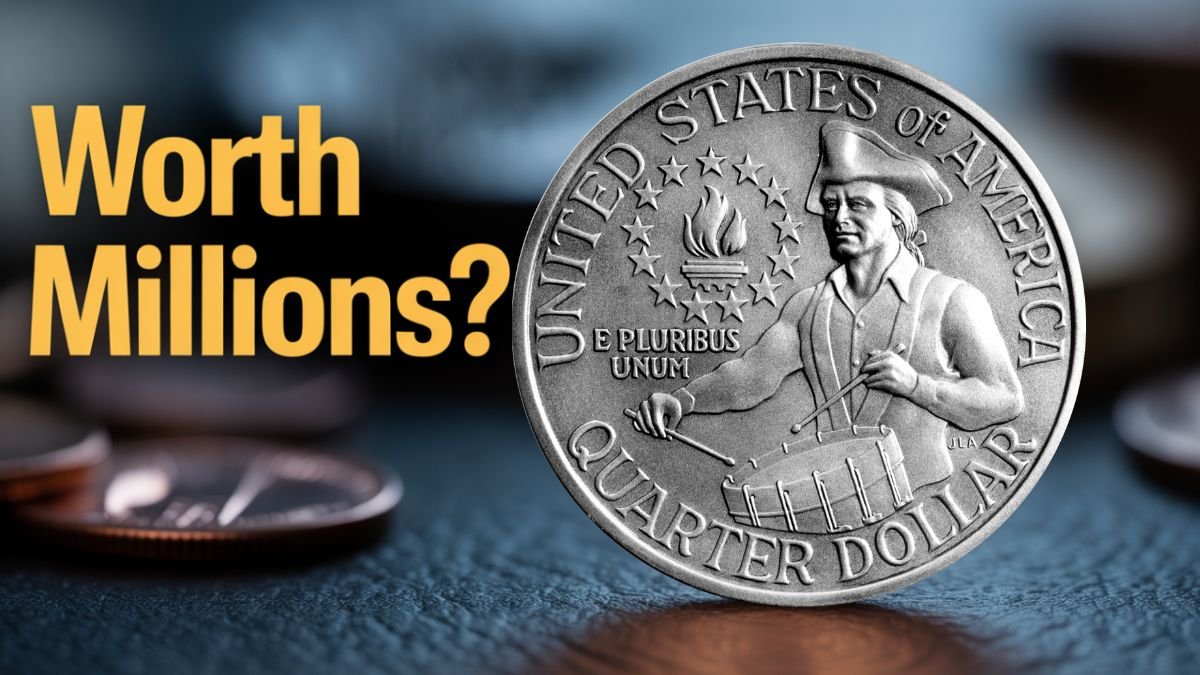
The 1976 Bicentennial Quarter, which most people in India have only seen in Hollywood movies or collector forums, is today the hottest topic in the global numismatic market. Many collectors in the United States have discovered extremely rare and high-value Bicentennial Quarters in recent months, among their everyday pocket money, old family collections, or by chance. This shift to 2025 is made even more interesting by the strong demand now being seen for flawed coins, silver-clad compositions, and high-grade pristine variants, which can make a modest 25-cent coin worth thousands of dollars. For avid collectors around the world, this new buzz is a reminder of how unpredictable, exciting, and unpredictable the world of numismatics can be—especially when an old commemorative coin resurfaces after years of obscurity.
The History and Growing Popularity of the Bicentennial Series
Issued to commemorate America’s 200th anniversary of independence, the Bicentennial Series coins were produced in large quantities. Despite this, very few coins in this series exhibit rare mint errors or extremely sharp strikes, which contribute to their extraordinary value today.
For years, the general understanding was that these coins were extremely common and therefore wouldn’t hold much value. But when high-grade Bicentennial Quarters began to be found in everyday circulation in 2025, a renewed enthusiasm for this coin spread worldwide.
Even in India, where American collectibles have a large following, people are reopening old collections, jars, and mint sets—perhaps to find a hidden rare coin somewhere.
The Impact of Social Media and the Trending Market
Social media has had a major impact on the numismatic world over the past few years. Viral videos, posts, and auction records related to the 1976 Bicentennial Quarter have attracted young collectors. Five-figure auction prices for several flawed Bicentennial Quarters have piqued the interest of a new generation in the market.
Mumbai-based numismatist Pratap Verma explains, “Stories like these attract young collectors. This coin could be found in every household, but some turn out to be rare and unique. This mystery and excitement keeps the market alive.”
Why Have 1976 Bicentennial Quarters Become So Valuable?
The biggest reason for the sudden increase in the value of these 1976 coins is due to minting errors and variations in metal composition.
- Many coins have been found to have doubled dies, causing parts of the design to appear as double layers. This error is caused by mistakes in minting alignment. Such coins are considered extremely valuable.
- Furthermore, silver-clad versions—originally intended for collector sets—sometimes inadvertently enter circulation, further increasing their rarity.
- Off-center strikes, clipped planchets, and imperfections in the metal layering also give the 1976 Quarter exceptional value.
Meanwhile, grading, i.e., the condition of the coin, has the greatest impact on its price. Finding a nearly 50-year-old coin with more than 90–95% of its original luster is rare. This is why high-grade Bicentennial Quarters are selling for higher prices than ever before at auctions in 2025.
Identification by Design: How to Mark Rare and Valuable Quarters?
A collector first notices the coin’s exterior.
The drummer boy’s detailed uniform, sharp star pattern, and clean, sharp dates of 1776–1976 indicate a strong strike.
The coin’s edge also helps identify its metal composition—the copper-nickel layers of ordinary circulation pieces are clearly visible, while the silver-clad versions have a distinct luster and color balance.
Serious collectors analyze the metal’s texture using microscopic instruments.
“Even slight differences in metal texture can reveal its value and provenance,” says American researcher Lisa Moreno.
1970s Minting Technology and the Diverse Effects of Production
The 1970s were a period of major change in U.S. Mint technology. The overwhelming demand for the Bicentennial Series put immense pressure on Mint machinery.
This pressure led to irregularities in many coins—differential die fatigue, die polishing, and differences in metal composition.
Some of these variants remained undiscovered for years, but now, new grading techniques and data-sharing have made identifying these rare coins easier.
Silver-clad variants, primarily intended for collector sets, that accidentally enter circulation are a treasure trove for collectors. Several such examples have been discovered in recent months, and experts believe that some hidden silver variants may still exist in circulation.
The 2025 Market and Growing Collector Demand
Interest in modern U.S. commemorative coins has steadily increased in the 2025 numismatic market.
The Bicentennial Quarter’s cultural heritage, design, and historical significance make it even more special.
Auctions in the US and Europe have seen intense competition for certified flawless coins.
This trend signals to investors that mid-20th-century commemorative coins have the potential for long-term value appreciation.
Indian collectors are also now active in global auctions.are joining in. The past six months have seen a significant increase in inquiries for Bicentennial Quarters. While ordinary circulation coins are not valued very highly, attention is primarily focused on silver-clad coins and those with major flaws.
The Growing Importance of Verification and Expert Evaluation
As the popularity of this coin grows, accurate identification and evaluation has become extremely important.
Grading agencies like PCGS and NGC are still considered the most reliable means, as they certify flaws, metal composition, and condition. Buyers have significantly greater confidence in certified coins than in those without grading.
However, experts warn that many ordinary coins are being mistakenly labeled as rare in the market, creating confusion.
Therefore, new collectors should rely on trusted dealers, official guides, and recognized auctions.
Future Prospects and Cultural Impact
The growing importance of the 1976 Bicentennial Quarter is not just a part of the numismatic market, but also signals a cultural shift.
Today’s generation is increasingly seeking objects with historical significance and solid investment instruments, and the Bicentennial Quarter has become a symbol of this trend.
Furthermore, digital research tools, online auctions, and a global collector community are facilitating a new generation’s entry into this field.
Hopefully, the discovery of new Bicentennial variants and flawed coins will further excite the market in the coming years.
While not every 1976 Quarter will rise in value, the real excitement lies in the possibility that perhaps one day a simple coin in your pocket could become a highly valuable treasure.
FAQs
1. Why are some 1976 Bicentennial Quarters worth big money?
Some 1976 Bicentennial Quarters contain rare mint errors, silver-clad compositions, or high-grade conditions that significantly increase their value in the collector market.
2. How can I identify a valuable Bicentennial Quarter?
Look for doubled-die errors, off-center strikes, silver-clad versions, and coins with sharp details or high luster. Certified grading can confirm rarity and authenticity.
3. Can valuable 1976 Bicentennial Quarters still be found in circulation?
Yes, rare Bicentennial Quarters are still being discovered in pocket change, old savings jars, and inherited collections, making them exciting finds for collectors.
