
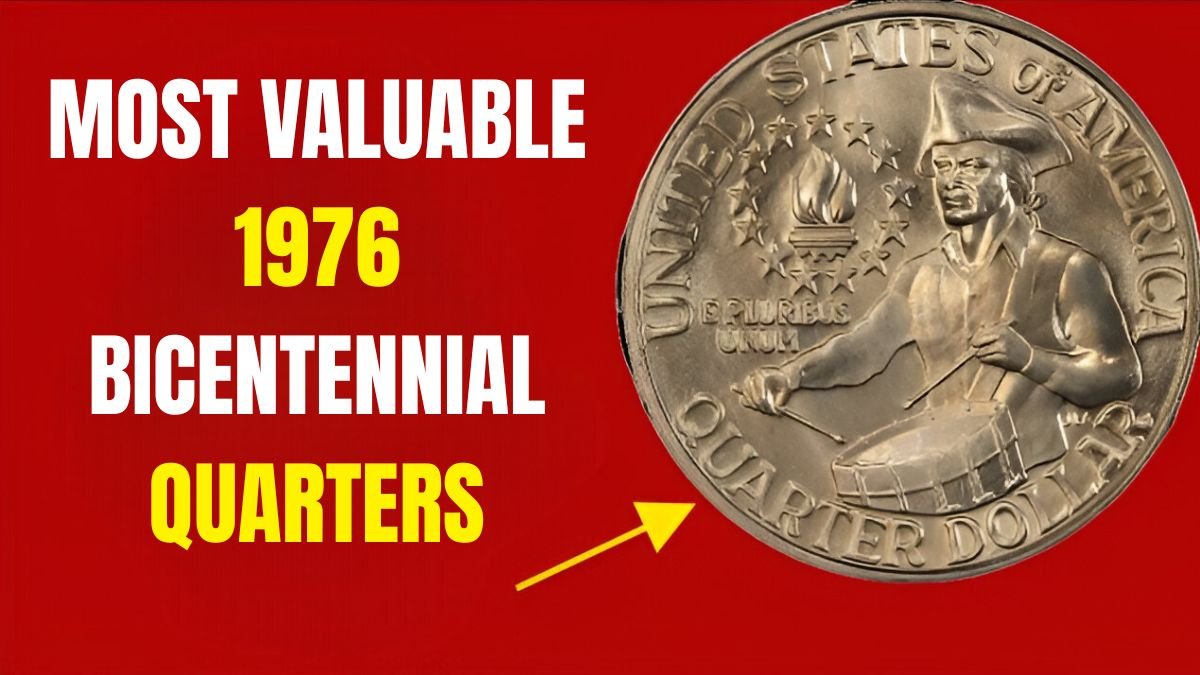
The 1976 Bicentennial Quarter is known for its distinctive design featuring a drummer boy on the reverse and the dual date “1776-1976” on the obverse. This coin commemorates America’s 200th anniversary. While it was minted as a commemorative coin, rare examples remain highly significant years later, both symbolically and economically. It’s not uncommon for rare varieties to suddenly surface in pocket change, bank rolls, or old collections, creating excitement in numismatic circles and auction houses.
Key Characteristics of Valuable 1976 Bicentennial Quarters
Some Bicentennial Quarters command higher prices due to their rare variations, errors, and exceptional condition. These are often identified by:
- Doubled Die Errors: Unusual and doubled impressions affecting the design.
- Off-Center Strikes: The coin’s design is struck off-center, which is not typical.
- Accidental Silver-Clad Issues: Some coins were mistakenly minted in a silver alloy instead of the standard copper-nickel.
- Exceptional Condition: A high level of preservation despite years of circulation.
- Strong Auction Performance: These coins sell with considerable buyer enthusiasm.
- Increased Media and Collector Interest: News surrounding the discovery of rare coins attracts public attention.
Design Highlights of the Bicentennial Quarter
This coin is memorable for its distinctive dual date “1776–1976” and the image of the drummer boy designed by Jack L. Ahr. In addition, it possesses several other characteristics that play a significant role in its rarity:
- Clear and sharp star design
- Mintmarks from Philadelphia, Denver, or San Francisco
- Standard copper-nickel and limited silver-clad compositions
- Coins with a proof-like or satin finish
- Strongly defined edges and rims
Collectors use all these characteristics to determine whether a coin is common or rare.
Coin Production and Rare Errors
The minting techniques of the 1970s experienced some inconsistencies that resulted in rare mint errors. These include:
- Silver-clad limited editions that accidentally entered general circulation.
- Special die polishing that gave the coin a brilliant finish.
- Sudden changes or anomalies in the alloy.
- Double printing in the design due to doubled dies.
- Errors due to off-center strikes or misalignment.
- Proof-like systematic marks from special mint sets.
All these technical characteristics prove crucial in determining the rarity of the coins.
Performance of Bicentennial Quarters in the Market in 2025
The demand and price stability of Bicentennial quarters in the market are at a high level. Especially coins in good condition, error coins, and silver-clad varieties are showing continuously increasing value. Some key trends include:
- Successful sales of high-grade coins at auctions.
- Price increases for newly discovered errors.
- Higher liquidity for certified rare coins.
- A growing trend among new collectors.
- Demonstration of long-term investment value in the coins.
All these aspects make the Bicentennial quarter a prominent contemporary collectible coin.
The Importance of Coin Condition and Preservation
The condition of the coin plays a decisive role in its valuation. Ordinary coins with wear and tear or blemishes are typically worth around their face value, but exceptionally clean and high-quality coins can be worth thousands of dollars. Signs of good preservation include:
- Strong and sharp edges and rims.
- Minimal wear on the surface.
- Bright and original luster.
- Uniform metal color.
- Clean and blemish-free areas.
Coin Authentication
Authenticating and certifying genuine rare Bicentennial quarters is crucial. Typically, expert collectors have their coins graded by organizations like PCGS or NGC. The authentication process includes:
- Checking the metal composition.
- Verifying mint die markings.
- Identifying errors.
- Secure packaging to protect the coin from counterfeiting.
- Documentation of authenticity.
Certified coins ensure higher value and security in the market.
The Appeal of Bicentennial Quarters for Collectors
This coin is not only a brief commemorative piece but also possesses immense collectible qualities. Its compact size, durability, and symbolic representation of American history make it popular among all collectors. Additional benefits include:
- Potential for sustained value appreciation.
- Easy storage and transport.
- Consistent demand in the collector market.
- A convenient entry point for beginners.
- Enhanced education and understanding of history.
- Good profit potential upon resale.
Price and Availability
Most Bicentennial quarters are common, fetching a price slightly above face value. Rare varieties, such as silver-clad or error coins, command significantly higher prices. Market prices are categorized as follows:
- Common circulation coins: Modest premium.
- High-grade coins: Moderate value.
- Silver-clad varieties: High premium.
- Error coins: Significant value increase.
- Rare doubled die coins: Top value.
- Brand new errors or unique specimens: Substantial profits at auction.
Conclusion
The 1976 Bicentennial quarter remains an invaluable part of American historical heritage, with rare varieties continuing to generate excitement and demand among collectors. Whether you are a seasoned numismatist or simply examining a quarter found in your pocket, this coin can prove to be a highly rewarding addition to any collection. After careful examination, this coin could become a priceless asset in your collection, not only financially but also from a cultural and historical perspective.
FAQs
Q. What makes the 1976 Bicentennial Quarter special?
A. It commemorates America’s 200th anniversary with a unique dual date (1776–1976) and a Drummer Boy design on the reverse.
Q. Are all 1976 Bicentennial Quarters valuable?
A. No, most are worth face value, but rare varieties with minting errors or silver-clad compositions can be highly valuable.
Q. What are common rare features to look for?
A. Doubled-die errors, off-center strikes, silver-clad pieces, and proof-like finishes.
Q. How does the coin’s condition affect its value?
A. Better preserved coins with sharp details and minimal wear command significantly higher prices.
Q. Where should I get my rare Bicentennial Quarter authenticated?
A. Professional grading services like PCGS or NGC authenticate and grade these coins for accurate valuation.
