
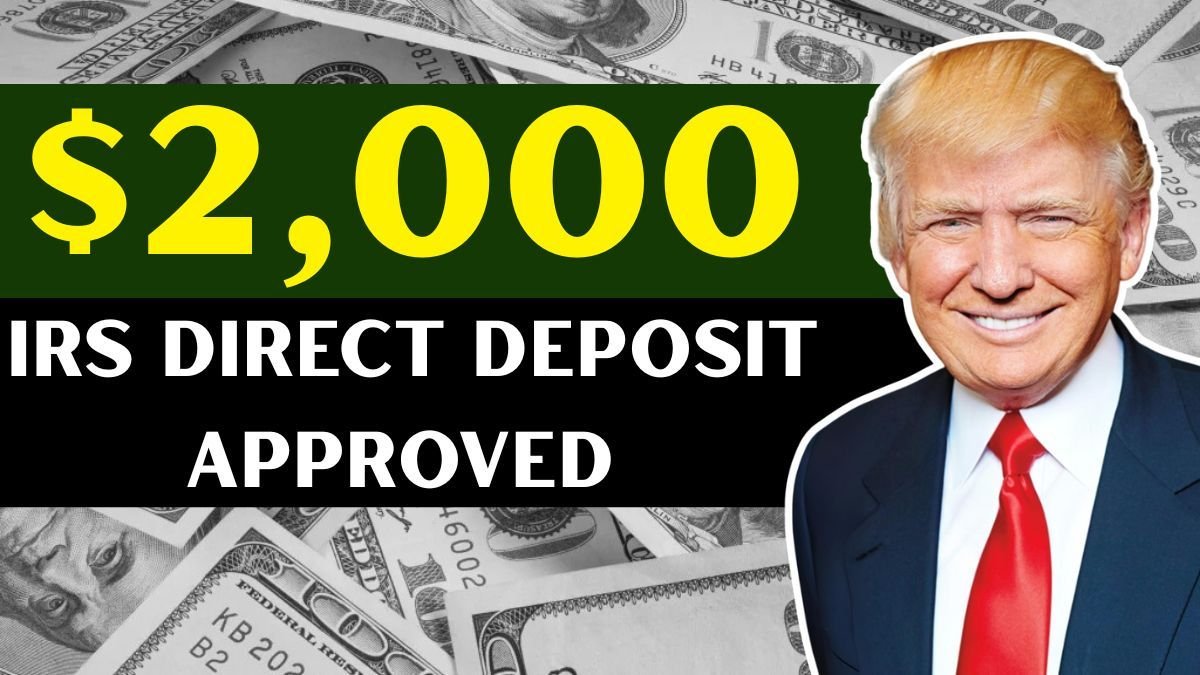
In recent days, a news story has been rapidly going viral on social media, YouTube, and various websites claiming that the IRS has finally approved a $2,000 direct deposit and that payments will begin on December 18th. Amidst rising inflation, rent, medical expenses, and daily necessities, such news sparks hope for relief in people’s minds. This claim is particularly appealing to those who rely on limited incomes, are waiting for tax refunds, or are connected to government assistance programs.
But the question remains, the one every responsible citizen should ask—is this news entirely true, or is it the result of incomplete information and rumors? In this article, we will delve into this claim, explore its background, and clarify the actual situation regarding the $2,000 direct deposit from the IRS.
This article is not intended to fuel any confusion, but rather to provide you with accurate information based on facts, so that you can protect yourself from false hopes and potential scams.
Background of the $2,000 Direct Deposit News
Whenever words like “IRS,” “direct deposit,” and “$2,000” appear together, they automatically grab people’s attention. The biggest reason for this is the stimulus checks and tax refund payments issued during the COVID-19 pandemic. At that time, the government did indeed send money directly to the bank accounts of millions of people.
Today, with economic pressure being felt again, people are quick to believe such news due to past experiences. Some reports and posts claim that the IRS has approved a new $2,000 payment, which will be sent via direct deposit starting December 18th.
In reality, such news is often created by combining or misrepresenting different government payments. Tax refunds, Child Tax Credits, Recovery Rebate Credits, or state-level assistance are presented as a “new approval,” creating confusion.
Has the IRS actually approved a $2,000 direct deposit?
It’s crucial to understand that the IRS does not initiate new payments on its own. Any new type of direct payment requires congressional approval and legislation. Around December, the IRS typically processes tax refunds, adjustments, or previously approved credits.
Regarding the $2,000 amount, the official IRS website and reliable news sources do not confirm any new universal program that would provide a $2,000 direct deposit to everyone. Therefore, claiming that “the IRS has finally approved a $2,000 direct deposit” can be misleading if it’s not linked to a specific existing program.
It’s often observed that some individuals receive approximately $2,000 as a tax refund or outstanding credit, and this experience is then presented as a general rule.
How accurate is the claim that payments will start on December 18th?
The December 18th date sounds very precise and official, but this is precisely what makes rumors seem credible. The truth is, the IRS does not begin payments for everyone simultaneously on a single date, unless a specific program has been announced.
Tax refunds and credit payments depend on an individual’s filing status, direct deposit information, and processing time. In some cases, payments might appear around mid-December, but this doesn’t mean a new $2,000 program has been launched.
Therefore, the December 18th date should be viewed as a general payment period, not the start of a new universal program.
Who are the people expecting a $2,000 direct deposit?
Such news spreads quickly, especially among people who are already connected to some form of government payment, including:
- Taxpayers
- Low-income families
- Senior citizens
- Individuals who previously received stimulus checks or tax credits
Some people assume that if they received a $1,400 or $1,200 payment before, they will automatically receive $2,000 now. However, every program has its own terms and deadlines. Expecting any amount without an official announcement can be risky.
The Risk of Misinformation and Scams
Wherever large sums of money and “direct deposits” are involved, scammers become active. Some websites and social media posts claim that you need to update your information or click on a link to receive $2,000.
This can be extremely dangerous. The IRS will never ask for your bank details or Social Security number via email, text, or social media. Any such request should be ignored immediately.
Misinformation not only raises false hopes but also puts people at risk of financial loss. Therefore, it is crucial to verify every piece of information before sharing it.
What Kind of IRS Payments Might You Receive?
If you are expecting money in your account around December, it’s important to understand what kind of payment it might be.
- Often, it is a tax refund that arrives in December due to late filing or an adjustment
- In some cases, it might be a payment for an old tax credit, such as the Recovery Rebate Credit or other adjustments
These payments are legitimate, but it’s inaccurate to call them a “new approval” or “new stimulus.”
Where to Get Accurate Information
If you want to know whether you are eligible for any payments, the best source of information is the official IRS website. To find out if you will actually receive a payment, the safest way is to visit the official IRS website.
There, you can check the status of your payment using tools like “Where’s My Refund.”
It’s wise to rely on official sources for information rather than trusting social media posts and unfamiliar websites. This will not only help you avoid confusion but also protect you from potential fraud.
What to Consider When Financial Planning
Hearing news about a $2,000 direct deposit might make future planning seem easier, but it’s risky to assume any amount as part of your income without confirmation. It’s best to plan your budget and expenses based only on confirmed and official income.
If any real government assistance does arrive in the future, it should be considered extra relief, not the foundation of your entire financial plan.
Conclusion
Headlines like “IRS Finally Approved $2,000 Direct Deposit – Payment Will Start From December 18” may sound reassuring, but the truth is there is no clear and official confirmation of this claim. The IRS has not announced any new universal $2,000 payment plan.
Any payment received in December should be understood based on its actual source. Accurate information, reliance on official sources, and vigilance are crucial to protecting yourself from rumors and scams.
The best way to stay financially secure is to rely on facts, avoid jumping to conclusions, and verify every major news item. This prudence will help you make sound decisions in the future.
FAQs
Q1. Has the IRS officially approved a $2,000 direct deposit starting December 18
No, there is no official IRS confirmation of a new universal $2,000 direct deposit starting December 18.
Q2. Why are some people expecting a $2,000 payment in December?
Some individuals may receive tax refunds or previously approved tax credits around December, which are being misinterpreted as a new $2,000 payment.
Q3. How can I check if I will receive any IRS payment?
You should check the official IRS website or use tools like “Where’s My Refund” to verify any legitimate payment status.
