
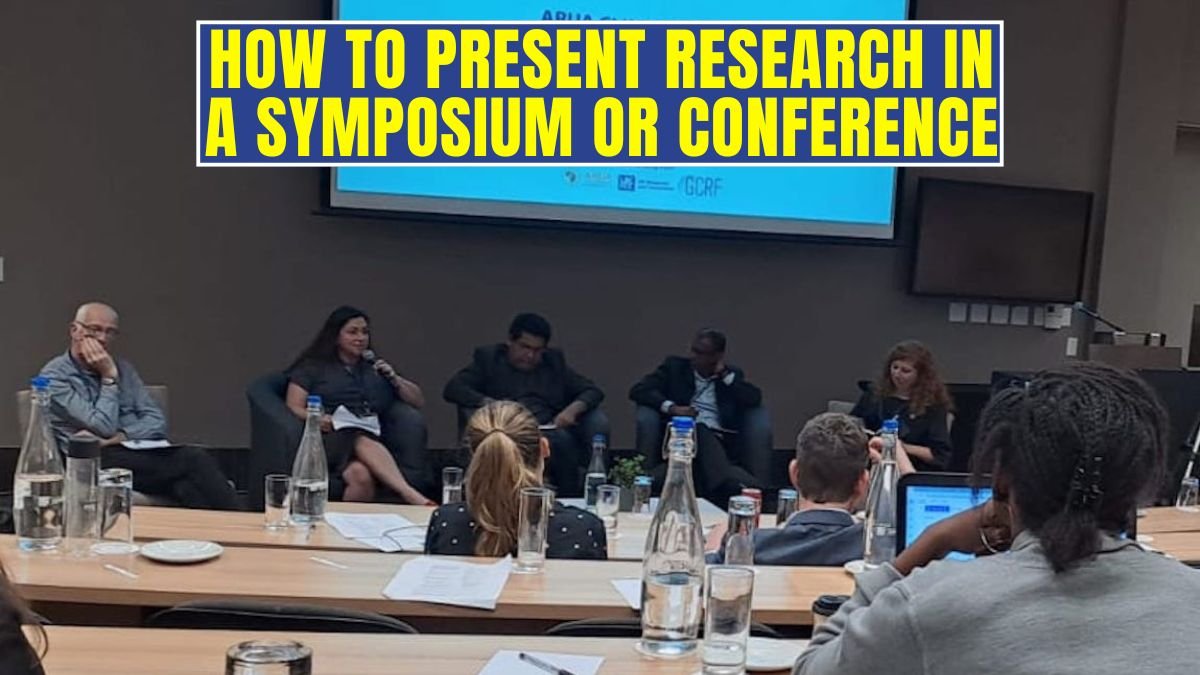
How to Present Research in a Symposium or Conference: Once a scientific conference abstract is accepted, the poster is arguably the next most crucial step. A scientific poster is not merely a chart or a picture, but it is a powerful tool to depict research visually. Apart from sharing research findings, it is also a way to create relationships with other practitioners, researchers, and experts, to discuss and exchange ideas and increase one’s professional network.
Every conference has its own specifications, such as poster size, font style, data presentation, and formatting rules. Hence, it is very important for the presenters to follow the directions of the conference to the letter. An effective poster not only informs but also involves the audience. The study indicates that the visual attractiveness of a poster draws more people than its content.
Besides the creation of the poster, the preparation of the presentation is of the same importance. Key to the successful presentation are rehearsing, expecting the questions, and being very familiar with the content of the poster. As the oral presentations for poster presentations are usually short, they should only highlight the most important points.
The Importance of Research and Poster Presentation
Scientific research aims not only to make new discoveries but to inform others about them. Poster presentations are the main means of communication in this process. After a researcher finishes a study and submits an abstract, the next logical step is to present a poster at a conference.
Visually showcasing research findings through posters is a powerful communication tool. It’s considered a simple and effective way to disseminate knowledge. While publication is a formal part of the research process, poster presentations provide an excellent opportunity to share preliminary research information.
Unfortunately, many healthcare professionals’ education doesn’t include formal research training or poster presentation practice. A guide like this can be extremely useful for them, helping them present their research more professionally.
Benefits of Poster Presentation
Poster presentation sessions aren’t just research exhibitions—they’re a platform for dialogue, collaboration, and learning. Here, participants showcase their work, draw inspiration from other experts, and spark new research ideas.
Sometimes, a good poster and the resulting discussion can lead to new research projects or collaborations. Furthermore, feedback from presenting a poster at a conference can help improve your manuscript.
Poster presentation is not only an academic activity but also an opportunity for career development. Presenting a poster at a conference can also provide you with the opportunity to receive travel or research funding from your institution. Most importantly, doing so not only contributes to your personal development but also supports the scientific advancement of your profession.
The Art and Science of Poster Design
Specific design guidelines are provided for poster sessions at any scientific conference. These guidelines include poster size, content structure, font type, and the use of illustrations and charts.
An effective poster is one that is attractive, easy to read, and logically organized. Research shows that viewers are first attracted to a poster’s visual appeal and then become interested in its content. Therefore, balance in color combinations, layout, and font selection is crucial.
When creating a poster, consider the following:
- The title should be clear and attractive.
- The font size should be large enough to be easily read from a distance of 3-4 feet.
- The use of graphs, charts, and tables should be limited but accurate.
- The content should flow—that is, the information should be in a logical order from the title to the conclusion.
- The use of colors should be balanced and professional-looking.
A beautifully and well-designed poster not only attracts the audience but also inspires them to stop and discuss your research.
Preparing for the Presentation: The Key to Success
After designing the poster, preparing for the presentation is the most crucial step. Simply putting up the poster isn’t enough—you must also master the art of presenting your research clearly and confidently.
To do this, you should:
- Practice your presentation several times.
- Anticipate potential questions and have answers prepared.
- Be thoroughly familiar with each part of your research so you can answer any questions with ease.
- Keep your oral presentation brief so as not to bore the audience and focus on the main points.
The purpose of a poster presentation is not to deliver a lengthy speech, but to present the key insights of your research in a short time.
Combining Oral and Visual Presentation
Brief oral presentations are common in scientific conferences that posters sessions hold as well. These presentations, which usually last 2-5 minutes, introduce the main findings and results of the study.
For some researchers, poster sessions represent a more comfortable and less strict environment compared to a traditional podium presentation. The question-and-answer atmosphere is open and interactive, allowing researchers to receive feedback on their work and develop new perspectives.
Sometimes, some conferences offer the option of a slide presentation instead of a poster presentation, regardless of the presentation format. If questioned researchers should be able to answer with authority, supported by their thorough knowledge and understanding of the work presented.
Communication and Networking Are Vital
Poster sessions are not only a way of communicating research, but also excellent opportunities for networking and career development. By showcasing your work, you get to meet other specialists, share ideas, and create the basis for possible collaborations.
The ideas and questions you get during this session serve to clarify your research. These conversations may also lead to new points of view for articles or studies that you have not considered before.
Therefore, don’t see a poster presentation as just an academic requirement, but rather as a chance for professional promotion and personal development.
Conclusion
A scientific poster is more than just a visual aid; it is the integration of knowledge, innovation, and communication. It offers researchers the chance not only to display their work but also to learn, develop, and progress.
An eye-catching, well-structured, and informative poster may be the conference account of your success. However, the real success is when you deliver your presentation with confidence, being prepared and clear.
In the end, a poster presentation is not merely a part of the conference, but a token of your input to the scientific community—emphasizing your expertise, effort, and commitment.
