
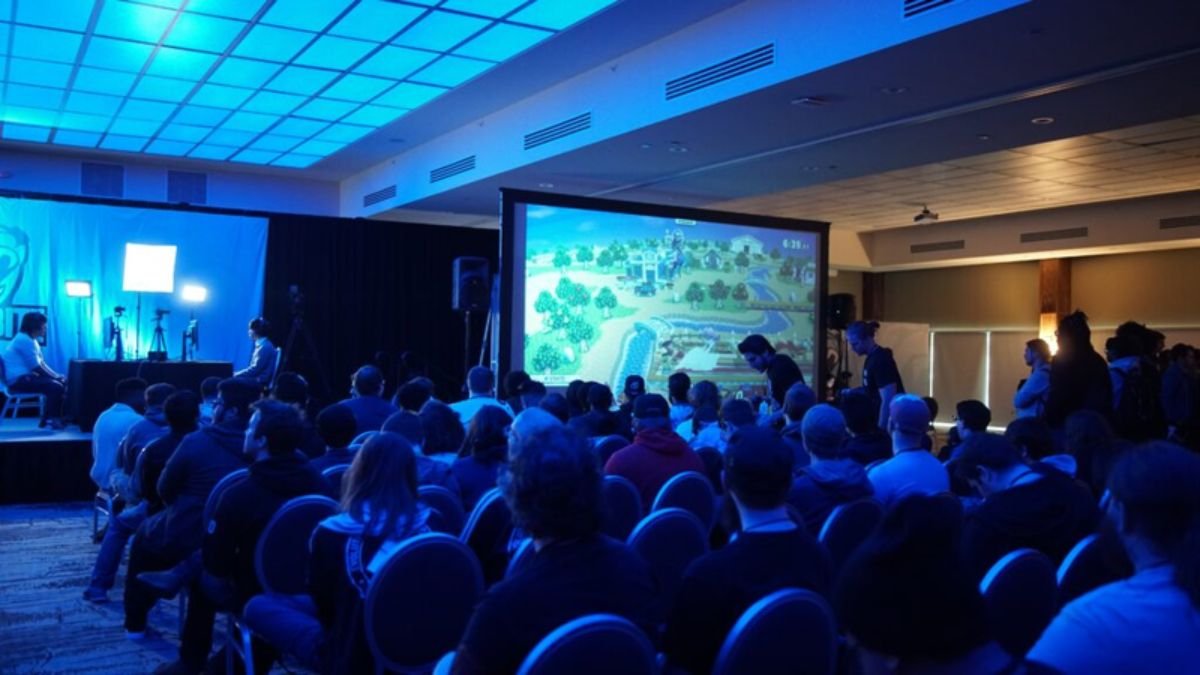
In the fields of education and business, various types of events are organized to share knowledge, experiences, and innovative ideas. These events primarily include seminars, conferences, workshops, and symposiums. While all of these events are held to enhance knowledge, there are significant differences in their purpose, format, and conduct. In this article, we will explore the differences between these four types of events and identify which program is appropriate for which situation.
What is a Seminar?
A seminar is an educational or professional event in which experts or speakers share information on a specific topic. Its primary purpose is to provide participants with a deeper understanding of the subject and enrich their knowledge. Seminars are typically held for small or medium-sized groups to facilitate interaction and question-and-answer sessions.
In a seminar, participants are provided with information on a specific topic through presentations, discussions, and case studies. Its focus is specifically on enhancing the knowledge of learners, researchers, and professionals. For example, if a university organizes a seminar on “Modern Technologies in Data Analytics,” students and professionals can learn about the latest trends and tools in data analytics.
What is a Conference?
A conference is a large event that facilitates the exchange of ideas and research results between various institutions, professionals, and experts. Conferences are typically held at the national or international level and consist of numerous sessions and lectures.
The purpose of a conference is not only to share knowledge but also to provide opportunities for networking and collaboration. Research papers are presented, panel discussions are held, and workshops and seminars are sometimes held. For example, at an “International Science and Technology Conference,” scientists from around the world present their research and discuss possibilities for new research collaborations.
What is a Workshop?
A workshop is a hands-on event whose primary objective is to enhance participants’ proficiency in a specific skill or technology. In this, participants not only listen but also actively participate. Workshops are typically small-group in format, allowing for individualized guidance and intervention.
Workshops include training, demonstrations, and practical exercises. For example, if a “Creative Writing Workshop” is held, participants will practice writing, receive feedback, and improve their writing style. Thus, the workshop’s focus is more on practical application than theory.
What is a Symposium?
A symposium is a special type of academic or professional event in which a group of experts present their research and ideas on a topic. The purpose is to foster in-depth discussion and knowledge sharing. In symposia, subject matter experts typically deliver presentations, followed by detailed discussions with participants.
Symposiums are often organized by higher education institutions, research organizations, and professional associations. These events are for a small, select group, with participants’ levels of expertise being based on their own. For example, at the Sustainable Energy Symposium, energy experts present their research and engage in in-depth discussions on the future of energy.
Key Differences Between Seminars, Conferences, Workshops, and Symposiums
The following are some key differences between these four types of events:
- Purpose: Seminars aim to share knowledge and promote discussion, while conferences aim to facilitate a large-scale exchange of ideas and research. Workshops aim to provide skills and practical training, and symposia aim to facilitate in-depth discussions by experts on a specific topic.
- Size and Participants: Seminars and workshops are for small to medium-sized groups. Conferences are larger, sometimes international, while symposia are organized for a smaller group of selected experts.
- Format: Seminars consist of presentations and question-and-answer sessions; conferences include multiple sessions, panel discussions, and research paper presentations. Workshops provide training and practical exercises, and symposia feature expert presentations and in-depth discussions.
- Duration: Seminars and workshops typically last a day or a few hours. Conferences can last several days, and symposia typically last a day or two.
- Usefulness: Seminars and workshops are useful for the general public, students, and professionals. Conferences are suitable for professional networking and research exchange. Symposiums are ideal for higher education and expert discussions.
Conclusion
Seminars, conferences, workshops, and symposia are all important programs for sharing knowledge, experience, and expertise. Each program has a different purpose, format, and benefits.
It is important for students, researchers, and professionals to know which program will be more useful in a particular situation. If your goal is simply to gain information on a topic, a seminar may be the best option.would be appropriate. If you’re looking for networking and research exchange, a conference is the right choice. If you’re looking to hone a skill, a workshop is best, and a symposium is ideal for in-depth expert discussions.
All four types of events play a vital role in education, professional development, and the exchange of ideas in society. By choosing the right event, you can enhance your knowledge and skills and gain better opportunities in the professional world.
