
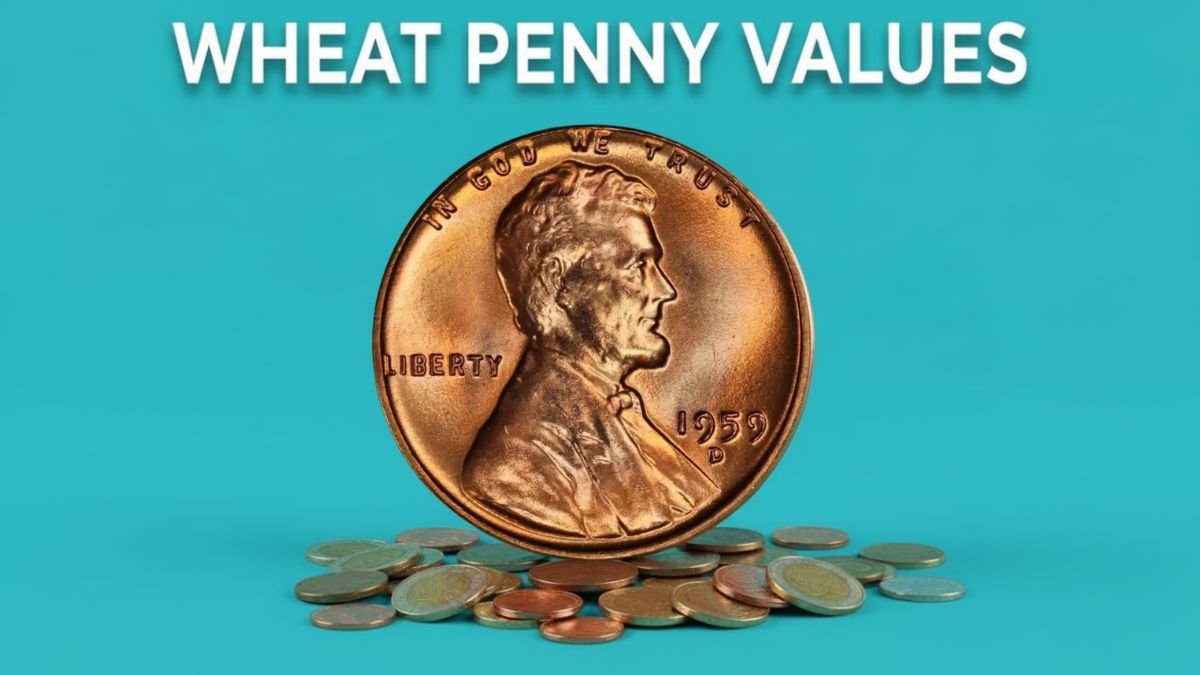
Wheat Penny Price Chart 1909–1940: The early period of Lincoln Wheat pennies, from 1909 to 1940, holds a very significant place in the history of American coinage. Coins from this period are not only historically important but also considered extremely valuable from an economic perspective. Many coins from this early period have reached values of thousands of dollars today. Low mintage figures, rare editions from specific years, and mint errors make these coins even more attractive to experienced collectors and investors.
For new collectors, this can be an exciting starting point, as the world of old copper coins is fascinating. Professional collectors, on the other hand, consider this period a treasure trove of the highest-value coins—where some coins can reach the price of a car. This comprehensive guide explains the value, rare dates, mintmarks, and essential value factors of this early period in simple language.
Why are early Wheat Pennies special?
The specialness of these 1909–1940 coins isn’t just about their age. These are the main reasons that make them special:
- First-year designs and historical significance
- Extremely rare key date coins, which can fetch thousands of dollars
- Scarcity, especially of Denver (D) and San Francisco (S) mintmarks
- High demand for coins in excellent condition, such as Mint State Red (RD)
- Continuously increasing collector demand, which drives prices up over time
This is why this time frame is considered the most important for serious, long-term collectors.
Main Factors Determining Value
Four factors play the biggest role in determining the value of any Wheat penny:
- Year and total mintage – The fewer coins minted, the higher the price.
- Mintmark – Coins with “S” and “D” mintmarks are generally the most expensive.
- Condition (Grade) and Color – Value varies significantly based on BN, RB, and RD grades.
- Errors and Varieties – Such as doubled die or missing mintmark errors.
A common Wheat penny might only be worth a few cents, while a rare one can be worth thousands of dollars!
1909–1919 Wheat Pennies: Prices from the First Decade
This first decade of Wheat pennies is considered the most valuable. Many of the rarest coins in the entire series were produced during this period.
Typical Prices:
- Common worn coins: $0.50–$10
- Rare mintmarked coins: $10–$75+
- Mint State coins: $100–$600+
- Rarest: 1909-S VDB — $600 to $4,500+ (depending on grade)
The 1909-S VDB is considered one of the most popular “key dates” in the world of US coins. It’s a top choice for every serious collector.
1920–1929 Wheat Pennies: Increased Minting, but Still Some Rare Gems
The production of Wheat pennies was greatly increased during the 1920s. Nevertheless, a few individual coins from this era are so scarcely that they are worth a fortune.
Approximate Prices for the Decade:
- Regular worn coins: $0.10–$1
- Medium-grade mintage marked coins: $1–$20
- Mint State RD: $40–$350+
- Most Rarest: 1922 No D (Weak/Strong) — $750 to $25,000+
The 1922 No D penny is often referred to as a “trophy coin” for the first collectors, as the few copies that were made as a result of a minting error.
1930–1939 Wheat Pennies: The Great Depression Decade and New Rarities
The 1930s were marked by the Great Depression in the United States. This resulted in varying minting numbers across different years. Some years saw large production runs, while others had lower production, making those coins rarer. Estimated Values for This Decade:
- Common worn coins: $0.08–$0.75
- Premium mintmark: $1–$25
- Mint State Red: $30–$300+
- Rarest: 1931-S — $65 to $2,100+
The 1931-S is a very important semi-key date. This coin is always in demand among collectors.
Most Valuable Coins of This Period (1909–1940)
Throughout the early period, some coins consistently command the highest prices:
- 1909-S VDB
- 1914-D
- 1922 No D
- 1931-S
- 1914-S and other early S-mint coins
Many of these coins, when found in Mint State Red condition, have even broken auction records.
Grading and Color: The Biggest Impact on Price
Grading is extremely important in determining the value of Wheat pennies. Especially in Mint State, it can increase the price many times over.
Common Grading Levels:
- Good (G) – Heavily worn but design is visible
- Fine (F) – Some details still clear
- Extremely Fine (XF) – Very sharp details
- Mint State (MS60–MS70) – Uncirculated, lustrous, and excellent condition
Color Classification:
- BN (Brown) – Most common
- RB (Red-Brown) – Medium value
- RD (Red) – Most expensive, especially in the early years
A coin from the same year, if it is RD in color, can sell for many times more than a BN coin.
How to Identify Rare Dates and Mintmarks
When examining Wheat pennies, be sure to check for the mintmark below the date. Identification Steps:
- Look for the S or D mintmark below the year.
- Examine the coin’s rim and strike quality.
- Check for any doubling or weak striking.
- Compare rare coins to certified images.
Sometimes a small mintmark variation can turn an ordinary coin into one worth thousands of dollars.
Final Conclusion
Lincoln Wheat pennies from 1909 to 1940 are one of the most important and exciting areas of American copper coin collecting. They offer a combination of history, rarity, and investment potential that is rarely found in other series. Examples include the 1909-S VDB, 1914-D, and 1922 No D. These coins still hold star value in the market today.
If you can identify the correct dates, understand the mint marks, and appreciate the importance of grading and color, you can build a collection whose value will steadily increase over time. Whether you’re searching through coin rolls, examining old estate collections, or looking at old coins passed down from family—hidden treasures that could change your fortune can still be found from these early decades.
FAQs
Q. What makes early Lincoln Wheat pennies valuable?
A. Their low mintages, rare mintmarks, historic designs, and special error varieties make them highly valuable.
Q. Which is the most famous coin from 1909–1940?
A. The 1909-S VDB is the most iconic and sought-after Wheat penny.
Q. How does condition affect value?
A. Higher grades like Mint State (MS) and full Red (RD) coins can be worth many times more than worn brown examples.
